Inclusion in Action – Part 8:Everyone Matters

Arrive early to almost any successful community event and you'll notice something interesting.
Long before the first guests walk through the door, people are already at work. Someone is arranging tables. Another volunteer is putting on a pot of coffee. A few people are hanging signs while someone else checks to make sure every chair is in place. Outside, another volunteer is picking up a few pieces of litter that most people will never notice.
None of these jobs are glamorous.
Few people will remember who completed them.
By the end of the day, most visitors will simply remember that they enjoyed being there.
It's easy to overlook those quiet moments, but perhaps they reveal one of the most important truths about community. The strongest communities aren't built by a handful of extraordinary people. They're built by ordinary people who quietly contribute in ways that often go unnoticed.

We often think about community in terms of what it provides. We talk about programs, services, activities, buildings, and events. Those things certainly matter. They create opportunities for people to come together.
But a building has never created a community on its own.
A program has never created a friendship by itself.
Community begins when people begin investing something of themselves in the lives of others.
That investment can look very different from one person to the next.
One person teaches.
Another listens.
Someone organizes an event.
Someone else notices a newcomer standing alone and walks over to introduce themselves.
A volunteer stays behind after everyone has gone home to sweep the floor.
A teenager helps carry equipment without being asked.
A retiree shares a lifetime of experience with someone just beginning their career.
None of those moments seem particularly significant on their own.
Together, they become the foundation upon which healthy communities are built.
Perhaps that's because people don't simply want to belong.
They want to matter.

There is an important difference between the two.
Belonging tells us we are welcome.
Contribution reminds us we have value.
Most of us can remember a time when someone trusted us with responsibility. Maybe it was coaching a younger athlete, mentoring a new employee, leading a project, or simply helping a neighbor during a difficult week.
Those moments stay with us because they remind us that our presence made a difference.
We weren't just participants.
We became contributors.
Communities change when that begins to happen.
People stop asking, "What can this community do for me?"
They begin asking, "How can I help make this community stronger?"
That shift may seem small, but it changes everything.
When people begin contributing, they naturally begin connecting.
Working alongside one another creates conversations that otherwise might never happen.
Those conversations become relationships.
Those relationships become trust.
And trust becomes the foundation of a community that people genuinely care about.
Perhaps that's why the healthiest communities are rarely built around a few leaders doing everything themselves.
They're built around people discovering that everyone has something meaningful to contribute.
Not everyone contributes in the same way.
Nor should they.
Communities need teachers and learners.
Organizers and volunteers.
Artists and accountants.
Listeners and storytellers.
People who lead from the front and people who quietly make everything work behind the scenes.
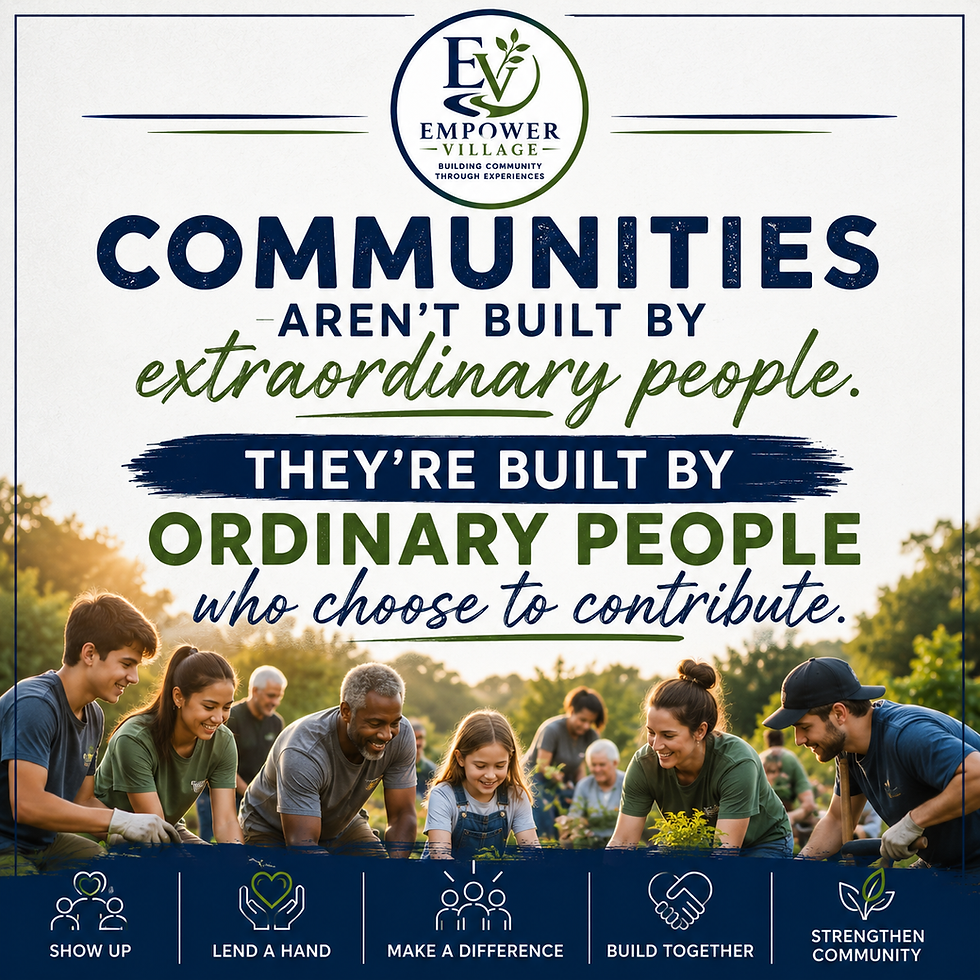
Every contribution adds another thread to the fabric of the community.
Remove enough of those threads, and the fabric begins to weaken.
Strengthen them, and something remarkable happens.
People stop feeling like visitors.
They begin feeling like owners.
Not because they own the building.
Because they've invested a part of themselves in the people around them.
Perhaps that's a better way to measure the health of a community.
Not by asking how many people attended an event.
But by asking how many people left believing they had made someone else's day a little better.
Because communities aren't remembered for their schedules or their buildings.
They're remembered for the people who made others feel seen, valued, and important.
In the end, that may be one of the greatest gifts a community can offer.
Not simply a place to gather.
But an opportunity for every person to discover that they matter.


Comments